

A front yard is the one part of the garden that everybody sees, including people who never come inside. It also has to work every day: bins, parking, deliveries, and the walk from the car to the door after dark. Good front yard landscaping handles both jobs without a designer's budget. This guide covers ten ideas that suit most houses, the spacing rules that keep them looking right for years, and the checks worth doing before you pick up a spade.
- Ten front yard landscaping ideas, from a framed front door to lighting and a seat out front
- How far from the house to plant shrubs, and why mature size matters more than pot size
- How to keep a front yard looking good in winter with evergreen structure
- How to fit a car and plants into the same space, including the UK rule on paving
- Which idea to start with, based on your biggest problem
Start with the entrance, not the lawn. Make the front door the focal point, give the path a clear route, plant in layers at their mature size, and add evergreen structure so the yard still works in January. Spend on the bones (path, beds, edging) before you buy flowers, and check local rules and buried utilities before you dig or build anything.
Before you start: four quick checks
These take an afternoon and save the most expensive mistakes.
- Rules first. Homeowner associations and local zoning often limit front-yard fences, walls, hedges and sometimes plant types. In the UK, Planning Portal guidance on paving front gardens and its fences, gates and walls pages cover what needs permission.
- Call before you dig (US). 811 is the free national number that gets buried utility lines marked. The 811 organisation says to contact it a few days ahead for any digging, including planting trees and shrubs or setting fence and mailbox posts. In the UK, check for buried services before digging deep for posts or foundations.
- Know your light and soil. Note which parts of the yard get full sun and which sit in shade. A soil test through your state cooperative extension (US) or the RHS soil guidance (UK) tells you what will actually thrive.
- Draw it. Sketch the house front with the door, windows, meters, downpipes, bin spot and where you park. Every idea below works better when it is placed around those fixed points.
One note on terms: Americans say front yard, Britons say front garden. The ideas are the same, but planting advice shifts with climate. We flag where US hardiness zones or UK conditions change the answer.
Ten front yard landscaping ideas
1. Frame the front door

University of Missouri Extension advises that the main focal point of a front yard should be the entrance itself, or something that reinforces it. A specimen tree off to one side or a bright bed beside the garage pulls the eye away from the door, which is the thing visitors are looking for.
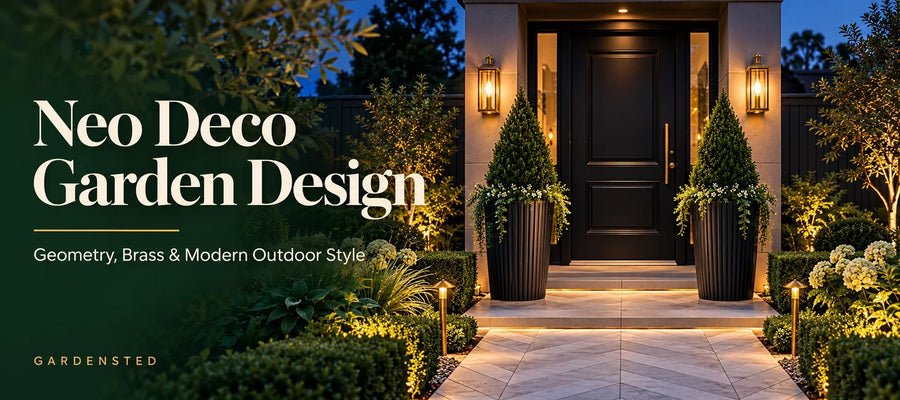
The easiest fix is symmetry at the door: a matching pair of containers, or two clipped evergreen shrubs, one either side. LSU AgCenter recommends potted plants of equal size to the left and right of the entrance. If you want pots to look good for more than one season, the RHS suggests evergreen shrubs in containers at least 45 cm (18 in) wide, and notes that containers need regular watering.
2. Give the walkway a clear route

A path that is too narrow, ends at the wrong spot, or zigzags for no reason makes the whole yard feel unplanned. Garden designer Matt Keightley, speaking to Homes & Property about a London front garden, put it simply: a clear path to the front door is best, because bends and zigzags get trampled. If you curve a path, give the curve a reason, such as going around a tree or a bed.
Make it wide enough to carry a bin or let two people walk together, then soften the edges with low, tidy plants such as lavender, catmint or dwarf grasses that will not flop across the surface. If re-laying the path is out of budget this year, simply clearing the edges and replanting both sides improves it a lot.
3. Layer the foundation bed by height

Foundation beds soften the hard line where the house meets the ground. Plant them in three layers: taller plants nearest the wall, rounded mid-height shrubs in the middle, and low perennials or ground cover along the front. LSU AgCenter suggests shrubs with a maximum height of 2 to 4 feet under windows, so you are not pruning them back from the glass every year.
Spacing is where most beds go wrong, because nursery pots are small. Two extension rules of thumb are worth remembering:
- University of Georgia Extension says to set a shrub half of its mature diameter plus 1 foot from the foundation.
- LSU AgCenter says large shrubs go 5 to 6 feet from the house and smaller ones at least 3 to 4 feet, and that the bed should be highest next to the house, sloping down about 6 inches for every 10 feet away from it so water drains away from the wall.
Check the plant tag for mature width, not the size in the pot. A crisp edge between bed and lawn makes even a simple planting look intentional.

EasyFlex No-Dig Landscape Edging (Dimex)
One suitable option for defining a bed edge without trenching. The listing describes a flexible, 1.5-inch-high recycled-plastic edging with an L-shaped no-dig design, secured with anchoring spikes, that bends into curves and works around tree roots. It suits mulched beds and gravel areas where you want a clean line between bed and lawn.
The kit comes in several lengths (40 ft, 60 ft, 100 ft and others). Measure your bed first and confirm the length on the listing.
4. Swap part of the lawn for gravel or ground cover

You do not have to remove the whole lawn. Keep a smaller, neat rectangle of grass where it looks best and replace the problem areas: strips under trees, the hot edge along the sidewalk, steep banks that are awkward to mow. Drought-tolerant planting in those spots cuts watering and mowing without leaving the yard looking bare.
For a gravel version, see our guide to gravel garden ideas for low-water landscaping. If you would rather keep more grass but spend less time on it, our 25 low-maintenance lawn ideas has options by grass type and climate.
Under gravel and on paths, landscape fabric helps keep the stone from sinking into the soil and slows weeds. In planting beds you replace often, organic mulch is usually simpler, because fabric makes it harder to add new plants later.

DeWitt Pro-5 Weed Barrier Fabric
A heavy-duty option for under gravel areas and paths. Retailer listings describe a 5 oz woven polypropylene fabric that lets air and water through while blocking weeds, with stripes every 12 inches to help line up plants and staples. It is a professional-weight product, which makes sense where the fabric will stay put for years under stone.
This product page offers several roll widths and lengths. Pick the size on the listing that matches your area, and secure the fabric with landscape staples before covering it with stone.
5. Use evergreen structure so winter does not look empty

A front yard cannot take a season off, because it is on show to the street all year. Keightley's advice in the same Homes & Property piece is to rely on structural, architectural planting such as ferns, box and other evergreens, so the garden looks good through winter.
Clipped evergreens act as the backbone and let looser flowering plants be the seasonal accent. In the UK, box can be hit by box blight and box caterpillar, so many gardeners choose yew or holly for clipped shapes instead. In the US, ask your county extension office which evergreens perform well locally before buying in bulk.
Want to map your front yard before you plant? The Complete Garden Planner covers your site, layout, plants, calendar and budget in one 105-page printable.
See the planner →6. Plant a hedge instead of a fence

A hedge gives privacy, marks the boundary and looks softer than a fence. The RHS also points out that a hedge filters dust and traffic particulate pollution in a way a wall or fence does not. Its planting guidance gives a clear timeline: early autumn is ideal for evergreen and semi-evergreen hedging such as box, privet and yew, but wait if the soil is waterlogged or frozen.
The RHS planting basics for a hedge:
- Small hedging plants, often called whips, are around 60 cm (2 ft) tall.
- Space them 30 to 60 cm (1 to 2 ft) apart in the row, depending on the plant and the final size you want.
- Mulch to about 7.5 cm (3 in) after planting and keep the hedge and 45 cm (18 in) either side weed-free.
In the US, plant when the soil can be worked and early enough for roots to settle before hard frost, and check your local height limit for front boundaries first. Some cities cap front-yard fences or hedges at around four feet.
7. Plant for pollinators with a cottage-style mix

A relaxed, flower-filled front border still reads as cared for if the frame around it is neat: clean edges, a clear path and an evergreen backbone. Choose long-flowering plants and plant them in drifts of three to five rather than one of everything, which looks busy. In the UK, the RHS labels plants that help insects with its Perfect for Pollinators mark, which makes shopping easier.
For plant lists that suit your region, see our guide to native plants that turn your yard into a pollinator magnet. Native plants tend to need less fuss once they are established, which suits a front yard you do not want to babysit.
8. Light the path and steps

Lighting does two jobs out front: it makes steps and edges safer and it makes the house look welcoming after dark. In the Chiswick garden Keightley designed, LED strips under the nose of each front step gave a warm, even wash of light from dusk. That is a job for a low-voltage or mains-powered system and is worth hiring for if you are not comfortable with wiring.
The no-wiring route is solar path lights. Treat them as markers, not floodlights: they give a soft glow that outlines the path edge, and they need a spot that gets direct sun during the day. For a more dramatic approach to garden lighting, see our guide to opera garden lighting ideas.

GIGALUMI Solar Pathway Lights (12-pack)
A budget way to mark the edge of a walkway without running cable. The listing describes stainless-steel stake lights with a solar panel, an automatic dusk-on sensor and an IP44 water-resistance rating. A 12-pack covers a typical front path with spacing to spare.
The listing we found for this product is the cool-white version. The same brand sells warm-white packs under a different listing, so check the colour on the page if you want a warmer glow. Light output from solar stakes is modest, so expect a gentle marker light rather than strong illumination.
9. Make room for the car without paving everything

Parking is the reason many front gardens get paved over. RHS research found that almost a quarter of front gardens in Great Britain are now completely paved, which adds to flooding and removes habitat. The RHS advice is practical: keep paving to a minimum, use permeable materials, grow plants wherever you cannot park, and leave planting pockets in paving or gravel so there is real soil underneath.
In England, the Planning Portal explains that you do not need planning permission for a new or replacement front driveway of any size if it uses permeable surfacing such as gravel or permeable block paving, or if rainwater drains to a lawn or border. Laying more than five square metres of traditional impermeable surface that does not drain to a permeable area does need permission. Fences, walls, gates and dropped kerbs have separate rules, and in the US local codes and HOA rules vary, so check yours.
10. Add a seat out front

A front yard that has somewhere to sit feels used. Designer Jo Thompson, who created the RHS Garden for Friendship, says a bench, bold colour and a spot to chat in the front garden help neighbours connect. Keightley also likes to put a bench in his front garden designs.
Keep the seat out of the walking line of the path, give it a pot or two so it looks planned, and place it where it catches morning or evening sun. A small bench by the door is enough.
Which idea should you start with?
Pick the problem that bothers you most, then start with the matching idea.
| Your problem | Start with | Idea |
|---|---|---|
| The house front looks flat or plain | Frame the door, then layer the foundation bed | 1, 3 |
| The approach feels awkward | Re-route or replant the path edges | 2 |
| Too much lawn to mow and water | Replace awkward strips with gravel or ground cover | 4 |
| Bare and grey in winter | Add evergreen structure | 5 |
| You want privacy or less street dust | Plant a hedge | 6 |
| You want more flowers and wildlife | Cottage-style pollinator border | 7 |
| Dark at night, unsafe steps | Path and step lighting | 8 |
| Parking has taken over | Permeable surface plus planting pockets | 9 |
| The yard feels unwelcoming | Add a seat and a pair of pots | 10, 1 |
Common front yard mistakes
University of Georgia Extension lists planting errors that show up in front yards constantly. In plain terms:
- Too many plants for the space. They look full for a year, then need replacing as they crowd each other.
- Shrubs that grow too tall. A shrub that reaches the windowsill in five years means constant hard pruning.
- Planting too close to the house. Use the half-width-plus-one-foot rule above, or the LSU distances.
- The wrong plant for the conditions. Sun lovers in shade, or moisture lovers in a dry spot, will never thrive.
- Scattering plants at random. Group them in mulched beds so mowing and maintenance are easier.
Skipping the utility check is the costly one. Call 811 before digging in the US, even for planting shrubs or setting a mailbox post. Some utilities lie just inches below the surface.
A sensible order of work
- Check HOA, zoning or planning rules, and call 811 if you are in the US.
- Measure and sketch the front, marking the door, windows, meters and parking.
- Fix the path and any hard surfaces first, since they are the most disruptive jobs.
- Mark out beds, set edging and improve the soil.
- Plant shrubs and hedges. In many regions autumn works well, but follow your local frost dates.
- Add containers, perennials and pollinator plants.
- Install lighting and place the seat.
- Mulch, water in, and keep a note of what you planted.
FAQ
How much does front yard landscaping cost?
It depends heavily on where you live and how much hard surface you build, so we have not put prices on these ideas. As a rough guide, paths, driveways and groundwork cost the most, while pots, edging, a hedge from small plants and a bench are among the cheaper changes. Doing it in phases spreads the cost.
What is the best low-maintenance front yard landscaping?
Evergreen structure, mulched beds with defined edges, and drought-tolerant plants in place of problem lawn areas need the least regular work. Our low-maintenance lawn ideas go deeper on the grass side.
Do I need permission to landscape my front yard?
Plants and beds rarely need permission, but fences, walls, gates, driveways and paving often do. In England, large areas of impermeable paving in a front garden need planning permission unless they drain to a permeable area. In the US, check HOA covenants and local zoning.
How far from the house should I plant shrubs?
Use mature size, not nursery size. University of Georgia Extension suggests half the shrub's mature diameter plus one foot, and LSU AgCenter suggests 3 to 4 feet for small shrubs and 5 to 6 feet for large ones.
How do I landscape a very small front yard?
Use one clear focal point at the door, a matching pair of containers, a single layered bed, and a hedge or evergreen backbone. The RHS shows that even a very tight front garden can have plants lining the path and a container by the door.
Final takeaway
You do not need to redo the whole yard at once. Pick the one idea that fixes your biggest problem, check the rules and utilities, and build in the order above. A framed door, a clear path, layered beds planted at their mature size and some evergreen structure will do more for your curb appeal than any amount of seasonal colour.
Turn these ideas into a plan for your whole garden
The door, path, beds, hedge and lighting all need a place on the plan. The Gardensted Complete Garden Planner helps you measure your site, map the layout, plan the planting and keep a seasonal calendar and budget in one place.
- Six bed layouts and a container planner
- Seasonal calendar and maintenance tracker
- Budget and shopping lists, plus a 12-page bonus pack


105-page printable PDF, instant download. US Letter and A4.
Product summary
| Product | Best for | Why it fits this article | Key feature to look for | Amazon |
|---|---|---|---|---|
| EasyFlex No-Dig Landscape Edging | Defining bed edges | Keeps layered beds and gravel areas tidy (ideas 3 and 4) | Flexible no-dig design, correct kit length | View on Amazon |
| DeWitt Pro-5 Weed Barrier Fabric | Under gravel and paths | Supports the gravel-for-lawn swap (idea 4) | Woven 5 oz fabric, right roll size | View on Amazon |
| GIGALUMI Solar Pathway Lights (12-pack) | Marking a walkway without wiring | Easy lighting for the path and steps (idea 8) | Light colour (cool vs warm white), sunny placement | View on Amazon |
As an Amazon Associate I earn from qualifying purchases. Product details come from manufacturer and retailer listings, and Gardensted has not tested these products. Planting guidance in this article draws on University of Missouri, LSU AgCenter and University of Georgia extension material, the RHS, and the UK Planning Portal.

0 comments