

A Mexican-style backyard is less about a shopping list of objects than a way of organising outdoor space: a sheltered outdoor room, walls that carry colour, the sound of water, and plants chosen for heat and bright light. Get those four things right and a single glazed pot or a band of hand-painted tile looks intentional instead of themed. This guide walks through layout, wall colour, tile, plants and winter-proofing, including the frost caveats most inspiration photos leave out.
What you'll learn
- Three distinct Mexican garden looks, and which one suits your yard
- How to build a courtyard feel even in an open backyard
- How to choose wall colours and pair them with plants
- Where Talavera tile works outdoors, and where freezing weather ruins it
- Which sun-loving plants to grow, and two popular "Mexican" plants to avoid
- How to adapt the style for cold winters and for UK gardens
The short version
Build around enclosure, one or two bold wall colours, a water or fire focal point, a hard-wearing floor, and heat-loving plants in containers wherever winters freeze. Treat Talavera and terracotta as accents unless your climate is frost-free, and keep tender plants like bougainvillea and agave where you can move them indoors.
Three Mexican garden looks
"Mexican garden" covers several traditions, and mixing them without a plan is the fastest way to a muddled yard. Pick one lead style and borrow lightly from the others.
| Look | What defines it | Best for |
|---|---|---|
| Colonial courtyard | A walled inner garden with fruit trees, potted plants, a fountain and an outdoor cooking spot. Its roots run back to Moorish gardens in Spain. | Patios, small yards, and anyone who wants a private outdoor room |
| Modernist colour-wall | Flat planes of saturated colour, a shallow water trough, and very restrained planting. This is the territory of architect Luis Barragán. | Contemporary homes and rectilinear yards |
| Desert and gravel | Agave and other succulents, gravel, stone, terracotta and whitewashed walls. | Hot, sunny, low-water sites |
Skip novelty props and choose real craft where you can. Talavera is a Puebla tradition, so a label saying "Talavera-style" can describe a piece made elsewhere. Ask the seller where it was made if that matters to you. Marigolds (cempasúchil) are part of Day of the Dead offerings in Mexico, so use them as a garden flower with some respect for that meaning rather than as a party decoration.

Layout: borrow the courtyard
Traditional Mexican houses wrap around an inner courtyard that serves as the main living space, used for cooking, relaxing, working and play. That idea transfers to any yard. The aim is an outdoor room: a defined edge, a place to sit, something to look at, and a reason to stay outside after sunset.
A landscape architect in San Miguel de Allende describes designing courtyards as a series of rooms, each with its own purpose, from a pool area to a dining terrace to a living room with a fireplace. If your yard is open rather than enclosed, tall hedges, walls or trellises can recreate the sheltered feel. For overhead structure and shade, our pergola ideas cover the options.
Three example plans
These are starting layouts, not rules. Scale them to your space.
Small patio (around 12 by 12 feet)
Paint one wall in a bold colour and leave the rest cream or white. Use a single large glazed pot or a small wall fountain as the focal point, add two chairs, and group six to eight containers in odd numbers. Hang one string of lights overhead. Our garden patio ideas pair well with this plan.
Narrow side yard
Treat it like a corridor. Lay a gravel path with flat stepping stones, line one side with matching terracotta pots, and train bougainvillea or another climber up the wall in warm climates. Finish the far end with a bench niche or a tiled accent so the walk has a destination.
Open backyard
Divide the space into rooms: a dining terrace, a fire and lounge area, and a planting court. Use walls, hedges or a pergola to enclose each one, and connect them with a continuous floor material such as brick in a herringbone pattern. One designer used mixed brick patterns on a patio and walkways to guide the eye toward different areas.
Wall colour that works
Colour is the fastest way to make a yard feel Mexican, and also the easiest to overdo. Barragán's work shows how much restraint helps: his pinks, reds and purples sit against minimalist forms, so the colour gets relief from starkness and the shapes stay simple. At Casa Gilardi in Mexico City he painted a side wall to match the colour of the jacaranda flowers in the courtyard, so the tree is echoed all year.
The traditional approach flips the planting logic. When walls are painted bold reds, yellows and oranges, courtyard plants tend toward simple green foliage and white flowers so the walls stay the star.
| Wall colour | Planting that suits it | Why it works |
|---|---|---|
| Terracotta or ochre | Blue-grey agave, white flowers, olive or citrus in pots | Cool foliage balances warm walls |
| Hot pink or magenta | Silver-green succulents, white blooms, deep green foliage | Quiet planting stops pink from competing with flowers |
| Cobalt or deep blue | Orange Mexican sunflower, marigolds | Complementary colours give maximum contrast |
| White or cream | Bougainvillea, mixed bright flowers | A neutral backdrop lets plants carry the colour |
Paint large test patches on the actual wall and look at them in morning, midday and evening light. Strong sun changes saturated colours dramatically, and a swatch viewed indoors tells you very little. For more on layering pattern and colour, see our bold-pattern garden decor guide.

Tile: Talavera and its limits
Hand-painted tile is the signature detail, but handmade clay tile and freezing weather do not get along. Manufacturer guidance is consistent on this point. One importer lists outdoor floors and outdoor kitchens as use-with-caution, requiring sealing and no freeze exposure, and it flags freezing conditions and de-icing salts as problems for the tile. Other sellers say Talavera is not frost-proof and recommend it only for frost-free exterior zones. Glazed handmade tile can also be slippery when wet and is not slip resistant, and one seller warns that pool chemicals damage the clay.
| Where you want tile | Frost-free climate | Freezing winters |
|---|---|---|
| Stair risers and wall panels | Good, seal as advised | Risky outdoors; protect from freeze or use frost-rated tile |
| Fountain or planter surrounds | Good, check the maker's guidance on water contact | Avoid unless frost-rated |
| Patio floor | Possible with sealing, but slippery when wet | Use a frost-rated porcelain with a Talavera-style pattern instead |
| Tabletops and indoor-outdoor covered areas | Good | Fine if kept dry and covered |
If you need a floor that survives winter, look for porcelain rated frost resistant, with very low water absorption. Retailers describe tiles under 0.5 percent absorption as frost resistant, but check the specification sheet for the exact product. Handmade tile varies in size and colour from batch to batch, so order a sample first, and buy extra: one importer suggests 10 to 15 percent.

Plants for sun and heat
The planting palette here is built for bright light and heat, mixed with a few courtyard classics. Citrus, olive trees, bougainvillea and lavender are the plants most often named for traditional courtyards, and in smaller spaces the whole courtyard can be filled with plants in pots.
| Plant | Role | Climate and care notes |
|---|---|---|
| Agave (for wet or cold sites, look at Agave ovatifolia 'Vanzie' or A. havardiana) | Sculptural focal point in gravel or a large pot | Needs sharp drainage and dry winter soil. Nurseries warn agaves dislike excess summer and winter moisture, and potted ones must come indoors when winters get too cold. In cold zones, plant by midsummer so roots establish. Keep spiny types away from paths. |
| Bougainvillea | Wall and pergola colour | Generally grown in zones 9 to 11 and not hardy in the UK. Needs at least six hours of direct sun, good drainage, and a gentle hand because its fine roots resent disturbance. It often flowers better when slightly pot-bound. |
| Mexican bush sage (Salvia leucantha) | Velvety purple and white spikes from late summer to frost | Full sun. University of Florida lists zones 7 to 11, while other growers say zones 8 to 10, so treat it as marginal in the colder end. A nursery reports reliability to about 0 °F only if the soil stays very dry in winter. |
| Mexican sunflower (Tithonia rotundifolia) | Tall orange back-of-border annual that pollinators love | Grows 4 to 6 feet or more in full sun and well-drained soil. Sow after the last frost or start indoors six to eight weeks early. 'Fiesta del Sol' is a compact option at roughly 2 to 3 feet. UK gardeners usually sow in March or April and plant out in May. |
| Marigold (Tagetes erecta, cempasúchil) | Orange and gold seasonal colour | An annual native to Mexico and Central America. Sow after frost in full or part sun. |
| Citrus and olive | Courtyard shade and fruit | Grow in large pots in cold-winter areas so they can be sheltered. |

A desert-style alternative
If your goal is low water and low upkeep, build the garden around gravel, stone and a few well-placed agaves. Our guide to gravel garden ideas covers the base layers and drainage in more detail. In wet climates, one southeastern nursery's advice is to plant agaves on a raised berm so water runs off, and to remember that clay soil drains poorly inside the root zone even if the surface sheds water.

Want to lay out your courtyard before you buy? The Complete Garden Planner covers your site, layout, plants, calendar and budget in one 105-page printable.
See the planner →Two plants to think twice about
Mexican feather grass (Nassella tenuissima, sold as ponytail grass or angel hair grass) self-sows heavily and has become a problem in several regions. California's invasive plant council has assessed it, and Texas extension material describes it as an invasive rangeland grass that escapes from landscaping. Choose non-invasive grasses such as Mexican deer grass or blue grama instead.
Mexican petunia (Ruellia simplex) is classed as a highly invasive plant in Florida, where it escapes from gardens into natural areas. University of Florida suggests avoiding it unless you buy a tested non-invasive cultivar such as 'Purple Showers', and points to the native wild petunia (Ruellia caroliniensis) as an alternative.
Containers and winter
Pots do much of the work in this style, and they are also where most winter losses happen. Terracotta is porous and the most vulnerable to freeze damage. Glazed pots resist water better but can still crack in a hard freeze when packed with wet soil. Talavera planters are not frost-proof either, and one importer advises moving them indoors if temperatures will drop below freezing and lifting them at least an inch off the ground when used outdoors.
Practical steps for pots you cannot bring inside: raise them on feet so drainage holes stay clear, group them together, empty saucers, and leave some space in the pot so expanding ice has room. Our guide to protecting your garden from the first frost covers timing and covers.
Affiliate disclosure: This article contains Amazon affiliate links. If you buy through these links, Gardensted may earn a commission at no extra cost to you.
As an Amazon Associate I earn from qualifying purchases.

Potrisers Large Invisible Pot Feet (12-pack)
Raised pots drain properly and are far less likely to freeze to the ground. These rubber feet are described by the seller as lifting planters about three-quarters of an inch, with three feet supporting very heavy containers. For a Talavera planter, where one importer suggests at least an inch of clearance, stack two feet or choose a taller foot.
Check the listing for pack size and weight rating before you buy.
View on Amazon →
D'vine Dev Terracotta Pots, Set of 3 with Saucers
A small set of terracotta pots in three sizes (about 4.2, 5.3 and 6.5 inches) with drainage holes and matching saucers. They suit echeveria, small cacti and herbs on a sunny step or table. Treat them as warm-season containers: unglazed terracotta should be emptied and stored dry before freezing weather.
Listing descriptions vary on indoor versus outdoor use, so read the product page before relying on them outdoors.
View on Amazon →Whichever pots you buy, use a fast-draining cactus and succulent mix for agaves and succulents rather than ordinary potting soil. Look for a mix that lists perlite or sand for drainage.
Water, fire and seating
Water is one of the essential ingredients in a Mexican courtyard, and Barragán's gardens often used running water as a central feature. You do not need a large fountain. A recirculating wall fountain, a shallow stone trough or a tiled basin does the job and gives the space a focal point. In freezing climates, drain or switch off water features before winter, and check the maker's guidance before lining a fountain with clay tile.
Outdoor cooking is the other classic element. Clay chimineas, or barbecues enclosed in stone, stucco or decorative tile, give you a focal point that doubles as a heat source. Place any fire feature on a non-flammable surface away from walls, overhangs and plants, follow your local fire rules, and keep water nearby.
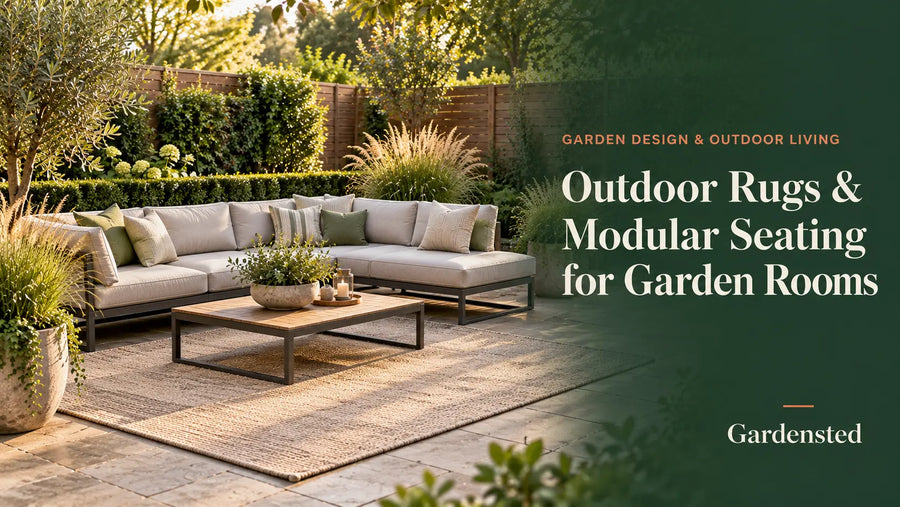
For softness and colour, designers suggest bright pottery, wrought-iron light fixtures, woven rugs and Mexican blankets. Our guide to outdoor rugs and modular seating helps with the soft furnishings.
Evening lighting
A courtyard comes into its own after dark, and warm light makes terracotta and tile glow. Overhead string lights are the simplest way to light a patio or dining spot, and they pair well with a fire feature. For more dramatic lighting techniques, see our outdoor lighting ideas.

Brightech Ambience Pro 48-Foot LED String Lights
A 48-foot outdoor string with 15 vintage-style Edison LED bulbs, described by one retailer as commercial-grade and dimmable. A set of this length can cover a small patio or run along a fence line. Look for soft white (about 2700K) for the warm glow that suits terracotta walls.
The brand sells plug-in and solar versions, and bulb colour varies, so confirm power type and colour on the listing.
View on Amazon →
Adapting to your climate
| Where you garden | What to do |
|---|---|
| Frost-free or very mild winters | The full style works. Plant bougainvillea and agave in the ground, seal Talavera tile, and use terracotta freely. |
| Hot and dry | Lean on gravel, agave, stone and whitewashed walls. Save water for pots and a small fountain. |
| Humid or wet summers | Prioritise drainage above everything. Plant agaves on raised berms and in gritty mixes, and avoid sprinklers hitting the leaves. |
| Cold winters | Keep bougainvillea, agave, citrus and Talavera in movable pots. Use frost-rated porcelain for floors. Tithonia and marigolds are annuals, so they fit naturally. |
| UK and cool wet climates | Treat bougainvillea as a conservatory or sheltered-patio plant. A nursery suggests some hardy agaves can survive British winters with perfect drainage and a rain sheet to keep roots dry. Sow Mexican sunflower in March or April. |
October checklist
Early October is the time to protect tender plants and plan for spring.
Before the first frost
- Move bougainvillea, citrus and Talavera pots to a bright, frost-free spot
- Empty and store terracotta pots dry, or raise them and leave room for ice to expand
- Save Mexican sunflower and marigold seed from spent flowers
- Paint wall colour test patches and watch them through a few days of changing light
- Order tile samples and check frost ratings before buying for floors
- Plan agave planting for spring or early summer so roots establish before winter
- Drain or switch off any water feature in freezing climates
Common mistakes
- Using Talavera on a patio floor in a freeze-thaw climate. This is the most common and most expensive error.
- Painting every wall in a saturated colour. One or two bold planes read as design; four read as chaos.
- Planting agave in heavy soil. Drainage matters more than sun.
- Choosing plants by name. Mexican feather grass and Mexican petunia both look attractive and both cause problems.
- Skipping the floor. Brick, gravel or frost-rated tile ties the rooms together better than any ornament.
- Forgetting to plan for winter. Decide in autumn where your pots will go before frost arrives.
FAQ
Can I use Talavera tile outdoors where it freezes?
Sellers generally advise against it. Handmade Talavera is not frost-proof, and importers say exterior use requires sealing and no freeze exposure. In cold climates, use frost-resistant porcelain with a similar pattern for exposed surfaces, and keep real Talavera in covered or indoor spots.
What colours should I paint the walls?
Traditional courtyard colours include red, yellow and orange, while Barragán used pink, red, purple, blue and yellow. Choose one bold wall, keep others neutral, and test large patches in different light.
What are the easiest plants for a Mexican-style garden?
Mexican sunflower and marigolds are easy annuals from seed. Agave needs little care once drainage is right. Bougainvillea is rewarding but needs warmth and prefers not to be disturbed.
Is Mexican feather grass a good choice?
It is best avoided. It self-sows abundantly and is classed as invasive in several regions. Mexican deer grass and blue grama are non-invasive alternatives.
Can I do this on a small balcony or patio?
Yes. One colourful wall, a few glazed containers, a single agave or succulent group and string lights are enough to carry the style.
Product summary
| Product | Best for | Why it fits this article | Key feature to look for | Amazon |
|---|---|---|---|---|
| Potrisers Large Invisible Pot Feet (12-pack) | Cold-winter and wet-climate containers | Keeps pots drained and off frozen ground | Lift height and weight rating | View on Amazon |
| D'vine Dev Terracotta Pots, Set of 3 | Succulents and herbs on sunny steps | Small terracotta accents with drainage holes | Drainage holes and saucers | View on Amazon |
| Brightech Ambience Pro 48-Foot LED String Lights | Patio and dining evenings | Warm overhead light for terracotta and tile | Power type and bulb colour | View on Amazon |
The takeaway
A convincing Mexican backyard comes from structure first and decoration second: an enclosed room, a wall or two of strong colour, water or fire as a focus, and plants that suit your light and winters. Add Talavera and terracotta where they will survive, and move anything tender before the frost. Start with one wall colour test and one anchor plant this month, and build outward in spring.
Turn these ideas into a plan for your whole garden
Courtyard zones, wall colour, containers, planting and lighting all need a place on the plan. The Gardensted Complete Garden Planner helps you measure your site, map the layout, plan the planting and keep a seasonal calendar and budget in one place.
- Six bed layouts and a container planner
- Seasonal calendar and maintenance tracker
- Budget and shopping lists, plus a 12-page bonus pack


105-page printable PDF, instant download. US Letter and A4.
Sources
- Landscaping Network: Mexican Garden Design
- Associated Press via iNFOnews: Courtyard gardens of San Miguel de Allende
- Encyclopedia.com: Luis Barragán
- Design Miami: Casa Gilardi
- Sunset: Mexican influences abound in this low-maintenance yard
- Clay Imports: Talavera tile use guidance
- La Fuente Imports: Talavera planter care notes
- UF/IFAS Extension: Salvia leucantha
- UW-Madison Extension: Mexican sunflower
- Kings Seeds: Tithonia Torch (UK sowing guidance)
- MasaAmerica: Cempasúchil
- Plant Delights Nursery: Growing agave in the Southeast
- Tropical Britain: Agave havardiana
- DIY Garden: Bougainvillea care (UK)
- Joy Us Garden: Bougainvillea in pots
- California Invasive Plant Council: Nassella tenuissima
- Texas A&M AgriLife Extension: Mexican feathergrass
- UF/IFAS Gardening Solutions: Mexican petunia
- HGTV: How to prevent cracks in terra cotta pots
- Winter can wreck your terra-cotta pots (via AOL)
- Santa Barbara RCD: Nassella tenuissima and non-invasive alternatives
Garden images in this article are AI-generated illustrations, not photographs of real gardens or of the specific listed products.
0 comments