

25 Garden Design Ideas That Make Any Outdoor Space Feel Better
25 practical design moves — not a single planting tip required to start.
Most gardens don't fail because the plants are wrong. They fail because nobody made any decisions about the space itself — where the eye should land, how someone moves through it, what happens after dark, what the ground underfoot actually feels like. A garden can have gorgeous individual plants and still feel like a collection of unrelated parts.
Good garden design isn't about following a strict style like "cottage" or "modern." It's a set of decisions that apply almost everywhere: a two-hundred-square-foot courtyard in Brooklyn, a sloped back garden in Yorkshire, a suburban quarter-acre in Ohio. The scale changes. The underlying moves don't.
These 25 ideas work at any size and in any climate. Some cost nothing and take an afternoon. A few are bigger projects worth planning around. None of them require ripping out what you already have — most are about seeing your existing space differently and making a handful of deliberate changes.
- Layout and structure moves that make a garden feel intentional, not accidental
- How material, color, and texture choices tie a space together
- Ways to design for evening use, not just daylight
- How to build privacy without closing the garden in
- Common design mistakes worth avoiding before you commit to changes
If you only take a few things from this guide: give the garden one clear focal point per view, repeat a small number of materials and plants throughout rather than using one of everything, keep edges and paths cleanly defined, and design lighting for evening use rather than treating it as an afterthought. Everything else refines those four ideas.

Structure and Layout
Give the eye one clear place to land.
Every well-designed garden has a focal point — something the eye is pulled toward the moment you step outside. It might be a specimen tree, a piece of sculpture, an arbor at the end of a path, or simply a beautifully placed pot. Without one, the eye drifts and the space feels unresolved no matter how nice the individual elements are. Pick one thing per sightline and let everything else support it rather than compete with it.
Design the negative space, not just the planting.
Beginners tend to fill every available bit of ground with something growing. Experienced garden designers spend as much time deciding what stays empty — a stretch of gravel, a clean lawn panel, an uncluttered patio corner — because open space is what lets the planted areas read as intentional rather than crowded. A garden with breathing room photographs better and lives better.
Work in odd-numbered groupings.
Plants, pots, and even seating pieces generally look more natural in groups of three, five, or seven rather than pairs or even numbers. Even-numbered groupings tend to read as formal and static; odd numbers create a loose triangular arrangement the eye finds more relaxed. This is a small, nearly free adjustment that changes how a whole bed feels.
Repeat a handful of elements throughout the space.
Cohesion mostly comes from repetition, not variety. Choose two or three plants, materials, or colors and use them more than once across the garden — the same ornamental grass in three different beds, the same terracotta pot in different sizes, the same stone used for both a path and a low wall. A garden that repeats a few things feels designed. A garden with one of everything feels like a plant collection.
Define zones before you decide what goes in them.
Before choosing plants or furniture, decide what the space is actually for in each section: dining, lounging, growing, storage, play. A garden that tries to do everything in one undivided area usually ends up doing nothing well. Even a modest yard can have two or three loosely defined zones, marked by a change in surface, a low hedge, or simply a shift in furniture grouping.

Use curves to slow the eye down, straight lines to speed it up.
A straight path or edge draws the eye quickly to the end point — useful for a formal entrance or a small space where you want a sense of length. A curved path or bed line makes people (and the eye) move more slowly and encourages exploration, which works well in larger or more relaxed gardens. Mixing the two without a reason is one of the more common causes of a garden that feels indecisive.
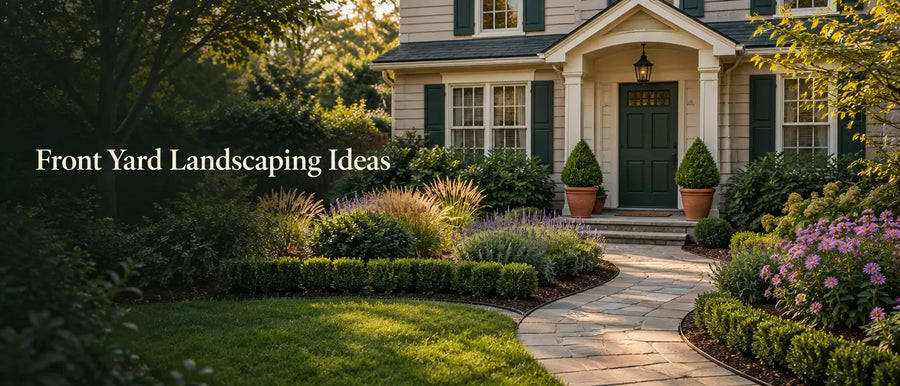
Mark garden edges cleanly.
A blurred line between lawn, bed, and path reads as neglect even in an otherwise well-planted garden, while a crisp edge makes the whole space look cared for with very little extra effort. A simple edging material installed once will hold that line for years with almost no ongoing maintenance.

Land Guard Corrugated Garden Edging Border
This is a straightforward corrugated metal edging strip designed to separate lawn from beds, paths, or gravel without the crumbling and heaving that plastic edging is prone to over a few seasons. It's a useful option where the goal is simply a clean, durable line rather than a decorative border feature. Look for a gauge that's thick enough to hold its shape once it's staked in — thinner edging tends to wave and buckle within a year or two.
Check it on Amazon →Let hardscape do more of the year-round work than plants.
Plants change with the seasons — some dramatically, some to nothing at all in winter. Paths, walls, pergolas, and paving stay constant. A garden that leans too heavily on plants for its structure can look bare for months of the year; one with good hardscape bones still reads as designed even when nothing is in bloom.
Frame views instead of leaving them wide open.
An arbor, a gap between two shrubs, or a simple gateway can turn an ordinary view — a tree, a distant hill, even a neighbor's well-kept planting — into something that feels deliberately composed. Framing also works in reverse: it hides what you don't want seen (a bin store, a utility box) by directing attention elsewhere.
Change levels where you can.
A single low step, a raised bed, a sunken seating area, or even a change from lawn to a slightly raised deck adds visual interest that a completely flat garden can't achieve on its own. Level changes also naturally suggest different zones without needing a wall or fence to separate them.
Want to turn these ideas into a layout? The Complete Garden Planner covers your site, layout, plants, calendar and budget in one 105-page printable.
See the planner →Materials, Color, and Texture
Choose a limited material palette and stick to it.
Pick two or three hard materials for the whole garden — one for paving, one for edging or walls, maybe one for accents — rather than a different material for every project as it comes along. A garden built from gravel, timber, and one type of natural stone will almost always look more considered than one that has brick, concrete pavers, and decorative rock all competing for attention.
Contrast leaf texture, not just flower color.
Flower color fades fast and is only around for part of the year. Leaf shape and texture — the difference between a broad hosta leaf, a fine ornamental grass, and a glossy evergreen — carries a planting scheme for months longer. Planting beds that only vary by flower color tend to look flat once the blooms are gone; ones that contrast texture hold interest year-round.

Pick a restrained color palette and repeat it.
Three or four flower colors used consistently through a garden read as intentional. Ten colors scattered without a pattern read as chaotic, even if every individual plant is lovely on its own. This is especially worth deciding early if you're planting in phases over a few seasons — write the palette down so future additions stay consistent.
Use one strong, consistent surface for the ground plane.
Switching between gravel, mulch, bark chips, and bare soil in different beds across the same garden makes the whole space look unfinished. Settling on one or two ground treatments and using them consistently is a fast way to make an existing garden look more put-together without touching the plants at all.
Add at least one reflective or light-colored surface.
A pale gravel path, a light-rendered wall, or pale paving bounces light back into planting beds and makes a shaded or north-facing garden feel considerably brighter. This matters most in small, enclosed, or heavily shaded gardens, where dark surfaces on all sides can make the space feel smaller and gloomier than it needs to.
If you're not sure your palette is too busy, take a photo of the garden and convert it to black and white. Areas that read as visually "loud" in color often flatten into a confusing jumble in grayscale — a quick way to spot where restraint is needed.
Light, Sound, and Atmosphere
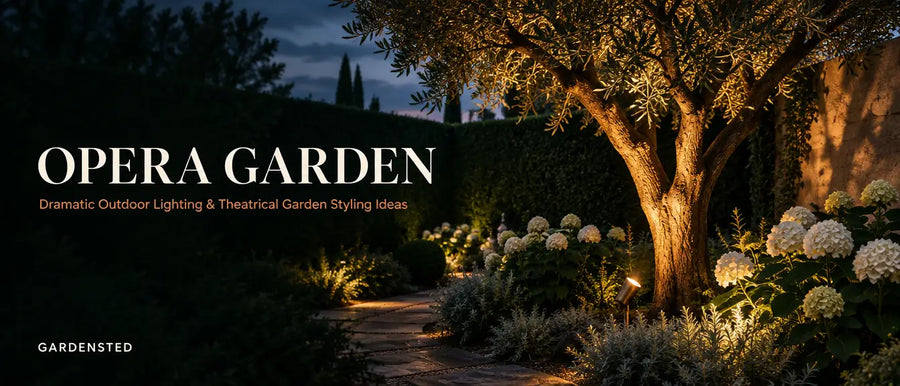
Design for evening, not just daylight.
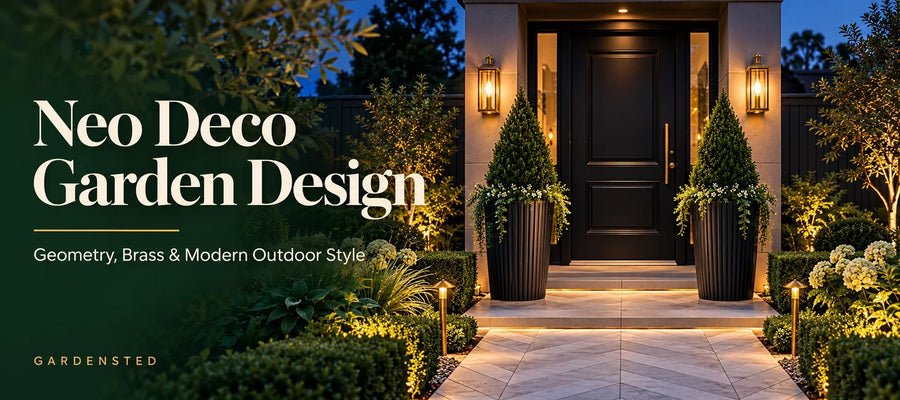
Most outdoor spaces are actually used more in the early evening than at midday, yet most garden planning happens with only daytime views in mind. Low-level path lighting, an uplit tree, or a single well-placed lantern extends the usable hours of the garden and changes its whole mood after sunset.

GIGALUMI Solar Pathway Lights
A set of stainless-steel solar stake lights along a path, bed edge, or step is one of the lowest-effort ways to add evening definition to a garden with no wiring and no ongoing electricity cost. They work best positioned to mark a line or a change in level rather than scattered randomly, and they need a reasonably sunny spot during the day to charge fully.
Check it on Amazon →Layer at least three light sources instead of one.
A single bright floodlight flattens a garden and creates harsh shadows. A mix of low path lighting, one or two uplights on trees or features, and a soft ambient source near seating creates depth after dark the same way good indoor lighting does — different heights and intensities rather than one source doing everything.
Bring in the sound of moving water, even in a small space.
A small recirculating fountain or bubbling urn does two things at once: it masks traffic and neighborhood noise, and it gives a garden a focal point that engages more than just sight. This works in a courtyard or balcony just as well as a larger garden — scale the feature to the space rather than skipping the idea because the garden is small.
Plant for scent near where people actually sit.
A fragrant plant tucked in a far corner of the garden does very little for anyone. The same plant next to a bench, a back door, or an outdoor dining table gets noticed every single time someone uses the space. Position scent deliberately rather than wherever there happened to be a gap.
Privacy, Planting, and Practical Layers
Build privacy in layers, not with one tall barrier.
A single tall fence or hedge can feel like a wall closing the garden in. Layering a lower planting in front of a taller screen — or combining a partial fence with climbing plants and a well-placed small tree — creates privacy that still feels like a garden rather than an enclosure. It also tends to work faster than waiting years for one hedge to reach full height.
Repeat a "hero" plant through the whole design.
Choose one plant — a particular grass, shrub, or perennial — and use it in multiple beds throughout the garden, even if the surrounding planting changes from area to area. This single habit does more to unify a garden than almost any other planting decision, especially in a garden being built up over several seasons rather than planted all at once.
Group containers instead of scattering them.
A single pot by the back door and another by the shed doesn't add up to a design. Three or five pots of varying heights grouped together on a patio or by an entrance reads as an intentional feature rather than leftover decoration, and it's one of the easiest changes to make with plants you may already own.

Leave circulation space wider than feels necessary.
A path or gap that's just wide enough for one person to pass will feel cramped the moment two people try to use it together, or someone's carrying a tray. Err on the wider side for any path or gap that people will actually walk through regularly — it's one of the most common regrets in garden design, and one of the hardest things to fix after paving is down.
Use plants to soften every hard edge.
A perfectly clean patio, wall, or fence line looks stark until something is allowed to spill over or grow against it. Even a narrow planting strip along a hard boundary — ornamental grasses along a fence base, trailing plants over a wall edge — makes built structures feel like part of the garden rather than separate from it.
Decide what the garden should feel like before deciding what it should contain.
This is the idea that ties the rest together. Before choosing plants, materials, or furniture, it helps to settle on two or three words for how the space should feel — restful, productive, social, private, wild. Every decision afterward, from the paving color to whether there's a fire pit, gets easier to make once that feeling is established, because it gives you something to measure choices against.
A Note on Region
In the US, garden design decisions around planting still need to work with your USDA hardiness zone, and in hotter regions, hardscape material choice matters more than it does further north — pale stone and permeable paving stay cooler underfoot and reduce glare. In the UK, the emphasis often shifts toward managing consistent rainfall and lower light levels for much of the year, which is where level changes, reflective surfaces, and evergreen structure tend to matter more than they would in a drier climate. None of the 25 ideas above are region-specific, but how you execute each one will vary with local conditions.
Common Mistakes to Avoid
Before You Change Anything, Check For These
- Designing bed by bed instead of as a whole space — individual beds can each look attractive and still add up to a garden with no coherent feel.
- Adding structure and lighting last, when they're actually easier and cheaper to plan before the planting goes in.
- Copying a style wholesale instead of borrowing the underlying principle behind it — the palette limitation, the repetition, the focal point.
- Under-committing to a color or material palette. A little restraint almost always reads as more considered than variety does.

The Key Takeaway
None of these 25 ideas require a full garden redo. Pick two or three that address whatever's bothering you most about your current space — a blurred edge, a garden that goes dark and unused after 6pm, beds that look busy without looking good — and start there. Design is cumulative: a garden that applies a handful of these principles consistently will almost always feel more finished than one with more expensive individual features and no underlying plan.
Turn these ideas into a plan for your whole garden
Focal points, zones, edging, lighting and planting all need a place on the plan. The Gardensted Complete Garden Planner helps you measure your site, map the layout, plan the planting and keep a seasonal calendar and budget in one place.
- Six bed layouts and a container planner
- Seasonal calendar and maintenance tracker
- Budget and shopping lists, plus a 12-page bonus pack


105-page printable PDF, instant download. US Letter and A4.
Amazon Products Mentioned in This Guide
| Product | Best For | Why It Fits This Article | Key Feature to Look For | Amazon |
|---|---|---|---|---|
| GIGALUMI Solar Pathway Lights | Adding evening lighting to a path, bed edge, or step | Directly supports the "design for evening" idea in this guide | Stainless steel build and a solar panel large enough to fully charge in partial-sun spots | View on Amazon |
| Land Guard Corrugated Garden Edging Border | Creating a clean, durable line between lawn and beds | Directly solves the "blurred edge" problem described in this guide | Metal gauge thick enough to hold its shape once staked | View on Amazon |

0 comments