

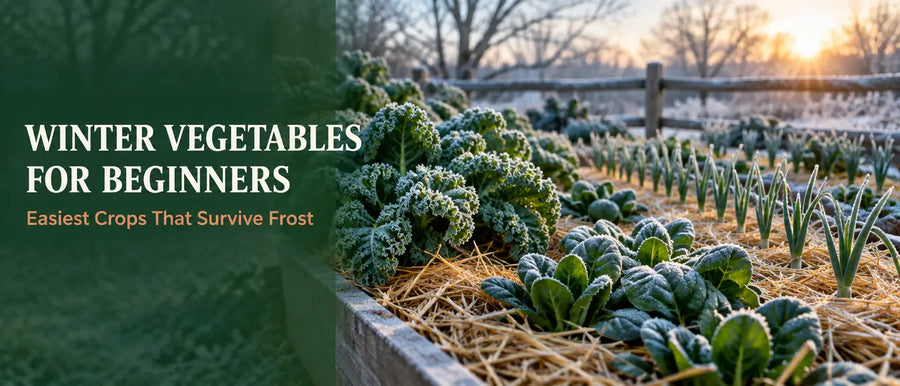
Winter does not have to shut the vegetable garden down. A short list of crops will take frost in stride, keep growing slowly through the cold, and in several cases taste better for the experience. This guide profiles 12 of them: how cold each one can realistically handle, what a winter harvest from it looks like, and what to watch for, with notes for both US and UK gardeners.
One honest note on timing before we start. Most of these crops need months to mature, so the real work happens in summer. The RHS advises sowing the slow ones, such as sprouting broccoli, Brussels sprouts, kale, winter cabbage and leeks, in late spring or early summer. If you are reading this in October, you are mostly managing crops that are already in the ground, with garlic as the big exception because it goes in now.
What You'll Learn
- Which vegetables tolerate hard frost, which only light frost, and which give up early
- Roughly how cold 12 popular winter crops can go, and where the figures come from
- How to harvest each crop through winter, and why frost can improve flavor
- When mulch, row cover and netting are worth the effort
- Common winter-garden mistakes and how to avoid them
The Short Version
The toughest vegetables for winter are kale and Brussels sprouts, which University of Minnesota Extension rates as hardy down to about 20°F (-6°C). Collards, winter cabbage, sprouting broccoli, spinach, leeks and turnips follow close behind, and root crops such as carrots and parsnips can stay in the ground under mulch until the soil freezes.
Garlic is the one to plant now. Everything else on this list is best sown the previous summer, so treat this as your plan for the crops you have, and your shopping list for next year.
How Cold Is Too Cold?
Gardeners tend to say "frost hardy" as if it were one thing. It is really a ladder. Purdue Extension sorts common vegetables into three tiers by how they react to frost, and it is the clearest starting point we have found.
Hardy
Tolerate hard frost
- Broccoli
- Brussels sprouts
- Cabbage
- Collards
- Kale
- Kohlrabi
- Mustard greens
- Onion
- Parsley
- Peas
- Radish
- Spinach
- Turnip
Semi-Hardy
Tolerate light frost
- Beets
- Carrot
- Cauliflower
- Celery
- Chard
- Chinese cabbage
- Endive
- Lettuce
- Parsnip
- Potato
- Salsify
Tender
Damaged by light frost
- Beans
- Cucumber
- Eggplant
- Muskmelon
- Okra
- Pepper
- Pumpkin and squash
- Sweet corn
- Sweet potato
- Tomato
- Watermelon
Two caveats. First, the tiers describe how a crop copes, not what it will enjoy. Parsnips and carrots sit in the semi-hardy tier at Purdue, while the RHS calls parsnips very hardy. The gap is probably explained by soil: the roots sit insulated underground while the foliage is what gets frosted. Second, a hard freeze is not the same as a hard freeze that lasts. A night at 20°F is a different event from a week of it, especially with wind or waterlogged soil.
With that in mind, here are rough low-temperature figures for the crops in this guide. They come from different sources, so treat them as a guide rather than a guarantee.
| Crop | Rough low | Where the figure comes from |
|---|---|---|
| Kale | About 20°F (-6°C) | University of Minnesota Extension |
| Brussels sprouts | About 20°F (-6°C) | University of Minnesota Extension |
| Winter cabbage | 15 to 20°F (-9 to -6°C) | Seed-company guidance (Seeds Now) |
| Broccoli | About 28°F (-2°C) | Seed-company guidance (Seeds Now) |
| Swiss chard | About 15°F (-9°C), better with cover | Seed-company guidance (Seeds Now, Southern Exposure) |
| Carrots | About 15°F (-9°C) | Seed-company guidance (Seeds Now) |
| Leeks | About 10°F (-12°C) in many areas | Seed-company guidance (Southern Exposure) |
| Parsnips | Down to around 0°F (-18°C) | Seed-company guidance (Seeds Now) |
| Collards, spinach, turnips, garlic | No dependable single figure | Extension sources class them as hardy but give no one number |
The cold a plant feels is not always the cold the forecast gives. Low spots collect cold air, a south-facing wall holds heat, and a mulched bed behaves differently from bare soil. A cheap thermometer placed next to the beds tells you what is happening where your crops actually are.

AcuRite Wireless Indoor/Outdoor Thermometer (model 00782A2)
A wireless sensor outdoors, a display indoors, so you can check the overnight low from the kitchen before deciding whether to cover the beds. The listing describes recent high and low records, which is the number that matters for frost decisions. Mount the sensor in shade near the crops, not against a sun-warmed wall, and use lithium batteries in very cold weather, as the maker's manual advises for deep freezes.
View on Amazon →12 Cold-Hardy Vegetables for Winter
We have grouped the crops by family because they behave alike. Brassicas are the backbone of the winter garden, leafy greens are the quick wins, alliums are the patient ones, and roots are the ones you leave in the ground and dig as needed. The days-to-harvest figures are for the sowing-to-harvest window where an extension source gives one.
The Brassicas

1Kale
Kale is the benchmark. It keeps growing when temperatures are cool, it stands up to hard frost, and Michigan State University Extension notes that cold converts its starches to sugars, so leaves picked in winter are noticeably less bitter than summer ones. The RHS says kale produces greens all winter, then sends up a flush of tender shoots in late winter or spring that are good stir-fried.
MSU adds that some kale and collard varieties will overwinter if left in the garden, and that the flower stalks are worth eating if you cut them before the buds open. Pick the outer leaves and leave the growing center so the plant keeps producing.

2Brussels Sprouts
Brussels sprouts are the longest commitment on this list and the RHS describes them as a classic for Christmas that can withstand harsh winter weather where they stand. They also take up a lot of ground for a long time, which the RHS flags as worth it.
Two practical notes. The RHS warns that Brussels sprouts, broccoli and cabbages are prone to clubroot, so rotate your brassicas and do not grow them in the same bed year after year. And a fall-garden guide from Garden.org suggests pinching off the top couple of inches of each plant if you want the sprouts to ripen together; left unpinched, the plants keep making new sprouts but they stay smaller.

3Collards
Collards share kale's cold tolerance and frost-sweetening. MSU Extension lists them alongside kale and Swiss chard as greens that develop a sweeter taste in cold weather, and notes that some varieties overwinter in the garden. The large, smooth leaves are generous for the space they take, and you can harvest a few at a time from the bottom of the plant.

4Winter Cabbage
Look for Savoy types and 'January King' style cabbages. The RHS says these are remarkably hardy, shrug off frost, and can be sown after overwintered crops of broad beans, early peas or potatoes to save space. MSU Extension says cabbage and Brussels sprouts tolerate light frosts and can stay in the garden until you need them. If you are curious about the ornamental side of the family, we cover that in our guide to ornamental and edible cabbage.

5Broccoli and Sprouting Broccoli
This one comes with a split. Heading broccoli is classed as hardy by Purdue, but seed-company guidance puts it nearer 28°F than kale's 20°F, so it is the first brassica to need cover in a hard freeze. Sprouting broccoli is the real winter crop. The RHS says it shrugs off hard weather and, whenever the air warms in late winter, produces tender shoots that keep coming for weeks.
For UK gardeners, the RHS names 'Bordeaux', 'Red Arrow' and 'Red Spear' as particularly hardy and early sprouting varieties. Because the plants stand for a whole year, plan for a bed that will be occupied until spring.
Want to know what to sow, and when, for next winter? The Vegetable Garden Master System has a frost-date worksheet, 12 ready-made bed layouts and one-page guides for 25 crops, in a 149-page printable planner.
See the planner →The Leafy Greens

6Spinach
Spinach is the fast one. UMN says it survives light frost and may overwinter, and Purdue classes it as hardy. MSU Extension is more cautious, recommending that spinach and lettuce be covered when temperatures drop below 36°F. The practical reading is that established plants handle cold well but soft, fast-grown leaves can be damaged, so a light row cover is a cheap way to keep the leaves looking good.
In mild-winter areas, extension guidance for Virginia's Zone 7a says spinach can still be sown in the first part of October, and RHS northern-climate guidance lists it among winter crops.

7Swiss Chard
Chard is the least cold-proof of the leafy greens here. Southern Exposure Seed Exchange calls it fairly cold-hardy but says it does best with some protection, especially in windy spots, and suggests row cover or a cold frame to prolong the harvest. MSU lists chard among the greens that sweeten in the cold. Pick the outer leaves and the plant will keep making more.
Leafy crops are picked leaf by leaf, so a good pair of snips beats pulling and tearing. UMN notes you can harvest chard, kale and mustard greens before the leaves reach full size, which also keeps the plants productive.

Fiskars Garden Snips
One suitable option for cutting kale, chard and collard leaves cleanly without yanking the plant. A sharp pair of snips makes precise cuts near the stem, which keeps you from tearing the crown. Keep a pair by the door; in winter you will be picking a few leaves at a time rather than harvesting whole beds.
View on Amazon →The Alliums

8Leeks
Leeks are about as low-maintenance as winter vegetables get. The RHS says they are hardy and do not need frost protection, that they look rough after a sharp frost but rebound, and that late varieties can stay in the ground through winter and into spring, with frost possibly improving the flavor. For UK winter use it recommends hardy cultivars such as 'Toledo' and 'Oarsman'.
The only real problem is access. If the soil freezes solid you cannot lift them, so a layer of mulch over the row is worthwhile where winters are hard.

9Garlic
Garlic is not a winter harvest, it is a winter crop: planted in fall, it roots through the cold months and is harvested the following summer. Colorado State Extension in Pueblo gives early September through the end of October as the planting window while the ground is still warm, and Virginia master gardeners say planting into early November is reasonable. Local frost dates should decide.
The Washington County Cooperative Extension (University of Kentucky) notes that hardneck garlic needs a long cold winter to go dormant properly, while softneck is what most grocery stores sell. Tilth Alliance recommends covering the bed with 3 to 4 inches of fall leaves or straw, which suppresses weeds, insulates the cloves, and is loose enough for the shoots to push through.
The Roots
Root crops are the ones you leave in the ground and dig as needed. Michigan State University Extension says carrots, turnips, beets, rutabagas and parsnips store well in the garden until just before the ground freezes. Mulch the tops with straw or leaves to keep the soil workable and the roots protected.

10Carrots
Carrots sit in the semi-hardy tier at Purdue, which describes the foliage; the roots themselves are better protected underground. Southern Exposure notes that both beets and carrots benefit from a layer of mulch around their tops in cold weather, and that you may need row cover or a cold frame if you want to keep beet greens through a sustained cold spell.
Leaving them in the ground also stretches the harvest. Garden.org's fall guide notes that a good mulch lets you keep digging carrots, beets and parsnips late into fall and possibly into winter.

11Parsnips
The RHS says all parsnips are very hardy and resistant to frost, and recommends preventing the ground from freezing so you can dig them even after a week of heavy frost. A layer of straw or hay over the rows does the job. The RHS also notes parsnips are best sown directly in the ground, and that they can take several weeks to germinate.

12Turnips (and Rutabagas)
Turnips are the quickest root on this list. Southern Exposure says turnips and rutabagas are sweetened by cold. Its advice is to harvest rutabagas before temperatures fall to 20°F, while turnips can take colder weather, especially under a thick layer of mulch. That is seed-company guidance rather than extension research, but it matches the general pattern that turnips are the hardier of the two.
When it is time to lift roots, loosen the soil on both sides of the row first so they come out whole instead of snapping. A broad fork is one way to do that without turning the bed over.

Bully Tools Broad Fork
A steel five-tine broad fork with fiberglass handles, suited to loosening compacted soil before you lift parsnips, carrots and leeks. It is a heavy tool, so it makes most sense if you have several rows or beds to work. For a single small raised bed, a standard garden fork will do the same job.
View on Amazon →Protecting Winter Crops (Without Overdoing It)
The hardiest crops on this list need very little. The RHS says leeks need no frost protection at all, and Brussels sprouts stand outdoors through harsh weather. Cover is for the borderline crops and the borderline nights: chard, spinach, heading broccoli, and anything that has just been planted.

Purdue Extension lists the basic options as mulch for small beds, blankets or floating row covers over rows, and cloches or plastic walls of water for a more expensive but very effective solution. Colorado State Extension recommends covering winter beds generously with mulch such as straw, fallen autumn leaves, shredded newsprint or bark chips, and adding evergreen boughs or timber at the edge if wind is a concern.
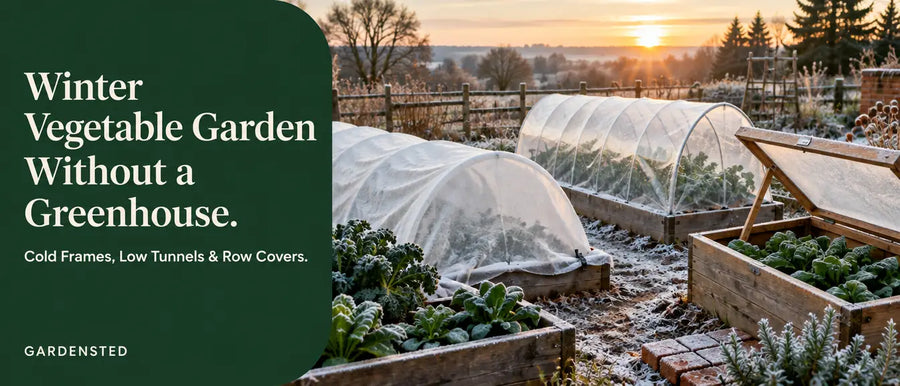
For most gardeners, the simplest setup is a spun-polypropylene floating row cover draped over a set of simple wire or plastic hoops. The hoops keep the fabric off the leaves, which matters because fabric touching foliage can transfer cold. Many hoop kits come as short sections joined with connectors, so check the count before you buy; listings for these kits suggest at least three sections per hoop. Row-cover listings typically quote only a few degrees of extra protection, with heavier fabric giving more but letting in less light, so match the weight to how cold your winter really is.
The RHS notes that winter vegetables are often attacked by pigeons and need netting from fall onward, and that slugs and snails are a major pest of leafy crops. If your kale looks shredded, the problem may be birds rather than cold.
For a longer look at what to do before the first hard frost arrives, see our guide to protecting your garden from the first frost. If you are growing in raised beds, our piece on elevated metal raised beds covers bed options that are easy to hoop. And if your ground freezes too hard for outdoor growing, indoor growing kits are a way to keep harvesting.
Why Frost Makes Vegetables Sweeter
It is not folklore. MSU Extension explains that as cold temperatures arrive, kale, collards and Swiss chard convert starches into sugars. Southern Exposure describes the same mechanism more fully: sugar produces energy, and it also lowers the chance of ice forming inside cells, which helps the plant survive the cold. The result is the flavor boost gardeners notice in kale, Brussels sprouts, carrots, parsnips and turnips after a few frosty nights.
Two practical points. Do not expect the effect from a single cool night; the sweetening builds over repeated cold. And wait until frozen leaves have thawed before picking them, because frozen leaves bruise easily.
Common Winter Vegetable Mistakes
- Sowing too late. Winter crops grow slowly or not at all once days shorten. The RHS recommends sowing the long-season brassicas and leeks in late spring or early summer; by October it is too late for most of them.
- Covering everything. Hardy crops do not need frost protection, and over-wrapping can make beds damp. Save the covers for the borderline crops.
- Forgetting netting and slug control. The RHS flags pigeons and slugs as the main winter pests. Cold gets blamed for damage that birds caused.
- Letting the ground freeze over your roots. If you want to dig parsnips in January, the RHS advice is to keep the ground from freezing. Mulch before the hard freeze, not after.
- Waiting too long to lift roots. MSU says roots hold in the garden until just before the ground freezes. After that, lifting gets difficult, so know your region's freeze-up.
US and UK Differences
The cold-hardy list is largely the same on both sides of the Atlantic, but the winter you are growing through is not.
In the UK, the RHS says Brussels sprouts, kale, leeks, parsnips and cabbages are fully hardy and can stand through British winters, and sprouting broccoli, spinach and chard are all realistic winter crops with a little cover. Hard ground and long cold spells are the main issue in northern areas, and the RHS school-gardening guidance for northern climates recommends using greenhouses, polytunnels or other protection to extend the season.
In the US, the picture varies more. Where winters stay mild, such as the Pacific Northwest, Washington State University Extension and Oregon State University Extension guidance describes overwintering brassicas, root crops, alliums and hardy greens, with garlic going in during October. Where the ground freezes solid, the realistic goal is a long fall harvest and roots stored in the ground under mulch until the freeze, plus row cover to stretch the season at either end.
Winter Vegetable Checklist
- Check the overnight low before covering anything
- Net brassicas against pigeons and watch for slugs
- Mulch root crops and leeks before the ground freezes
- Plant garlic in fall and cover with 3 to 4 inches of straw or leaves
- Keep row cover and hoops ready for borderline crops
- Pick outer leaves of kale, chard and collards, not the whole plant
- Wait for frozen leaves to thaw before harvesting
FAQ
What is the most cold-hardy vegetable?
University of Minnesota Extension rates kale and Brussels sprouts as the hardiest, to about 20°F (-6°C). Some seed companies give lower figures for specific roots, leeks and varieties, but those are less standardized. Variety matters as much as species.
Which vegetables can I grow all winter in the UK?
The RHS lists Brussels sprouts, kale, leeks, parsnips and winter cabbage as fully hardy, plus sprouting broccoli, with chard, parsley and rocket overwintering with a little protection.
What can I plant right now, in October?
Garlic is the standard answer in most places. In mild regions, spinach and hardy greens can still be sown in early October, and in the maritime Pacific Northwest, fava beans can go in from October to early November. Most of the other crops on this list should have been sown months ago.
Do I need to cover hardy vegetables?
Not usually. The RHS says leeks do not need frost protection, and Brussels sprouts and kale stand through winter. Cover chard, spinach, heading broccoli and new seedlings, and use mulch for roots and garlic.
Why do vegetables taste sweeter after frost?
Cold triggers the plant to convert starches into sugars, which lowers the risk of ice forming in its cells. The effect is strongest in kale, collards, Brussels sprouts and root crops.
Which vegetables will not survive winter?
Purdue's tender list includes beans, cucumbers, eggplant, peppers, squash, sweet corn, tomatoes and watermelon. Lettuce is borderline and needs cover.
Final Takeaway
If you want one plan, make it this: plant garlic now; lean on kale, Brussels sprouts, leeks and parsnips for the toughest winter harvest; mulch roots before the ground freezes; and keep row cover for the borderline crops and the harshest nights. Next summer, sow the slow crops early enough that they are ready when the cold arrives. For specifics on your own climate, your local extension office can give you first and last frost dates.
Turn these ideas into a plan for your own beds
Winter crops are sown months ahead, so the plan matters more than the cover. The Vegetable Garden Master System puts your frost dates, bed layouts and season calendar on paper.
- 12 ready-made bed layouts to copy or adapt
- A frost-date worksheet and planting calendars
- One-page guides for 25 crops: spacing, depth, days to maturity


149-page printable PDF, instant download. Crop guides cover 25 vegetables; kale, garlic and herbs are not in this edition.
Product Summary
Every product below also appears in the article above. We have not tested any of them.
| Product | Best For | Why It Fits | Key Feature to Look For | Amazon |
|---|---|---|---|---|
| AcuRite Wireless Indoor/Outdoor Thermometer (00782A2) | Checking overnight lows | Tells you when hardy crops really need cover | High and low records, wireless outdoor sensor | View on Amazon |
| Fiskars Garden Snips | Leaf-by-leaf harvests | Clean cuts on kale, chard and collards | Sharp, clean-cutting blades | View on Amazon |
| Bully Tools Broad Fork | Lifting root crops | Loosens soil so parsnips and carrots lift whole | Steel tines, fiberglass handles | View on Amazon |

0 comments